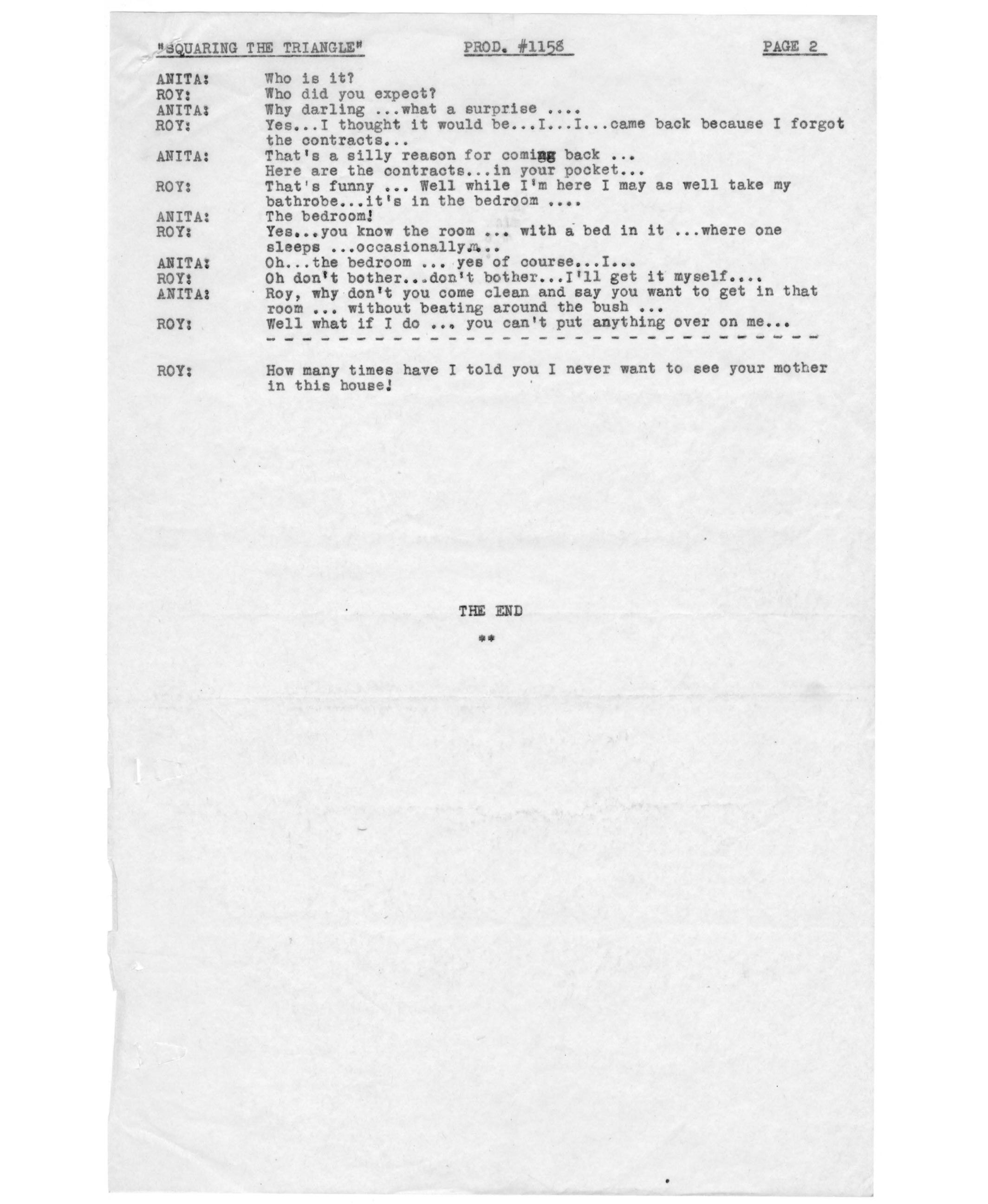
Before Humphrey Bogart, there was Mayo Methot on the silver screen.
These recently recovered archival documents offer a glimpse into a little-known chapter of Mayo Methot’s early acting career. Mayo Methot is probably best remembered today for her later marriage to actor Humphrey Bogart. But this document establishes that she was already appearing in professionally produced motion pictures around 1930. Here are a few key takeaways on this treasured find:
- Mayo Methot was a leading performer in Squaring the Triangle. The official application explicitly names her.
- The film dates to 1930. The examination and licensing paperwork establishes this.
- It was a one-reel comedy with synchronized dialogue. This is documented in the production application.
- A screenplay survives. We have two pages of dialogue that reveal the basic comic premise and ending.
- The film received New York approval. The examiner’s report records approval without listed eliminations.
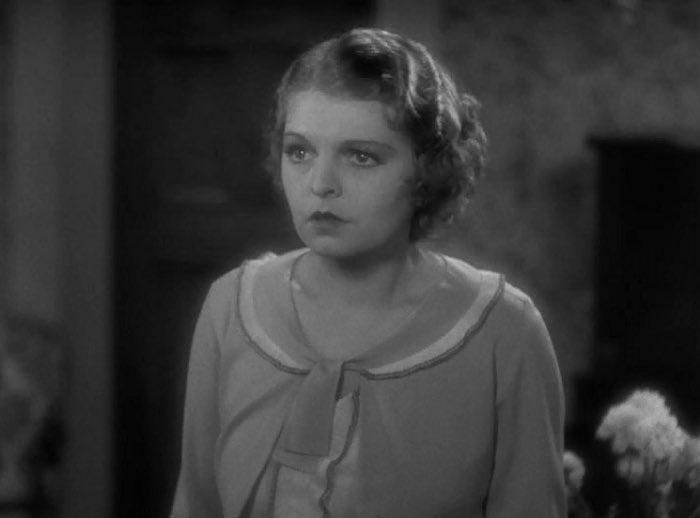
1. The most important discovery: Mayo Methot is identified as a leading character
On page 6, the original New York State application for a film license identifies:
- Title: #1158, Squaring the Triangle
- Male leading character: Donald Brian
- Female leading character: Mayo Methot
- Production company: The Vitaphone Distributing Corporation
- Genre: Comedy
- Length: 614 feet
- Reels: One
- Sound: Synchronized dialogue, 100%
This is particularly valuable because it is an official production record identifying Mayo Methot as a leading performer, rather than simply mentioning her in a newspaper or publicity listing. The two principal characters are Anita and Roy, with Mayo in the role of Anita and Donald Brian playing Roy.
Why the government paperwork?
In 1930, getting a movie onto theater screens in New York wasn’t simply a matter of distributing prints. State law required films to be submitted to the New York State Education Department for examination and approval before they could be publicly exhibited. The state maintained a film censorship system that could approve a picture, demand cuts, or reject it entirely.
These documents are part of that process. They show Squaring the Triangle being examined, approved and licensed for exhibition in New York—a fascinating glimpse into how Hollywood movies were regulated nearly a century ago.
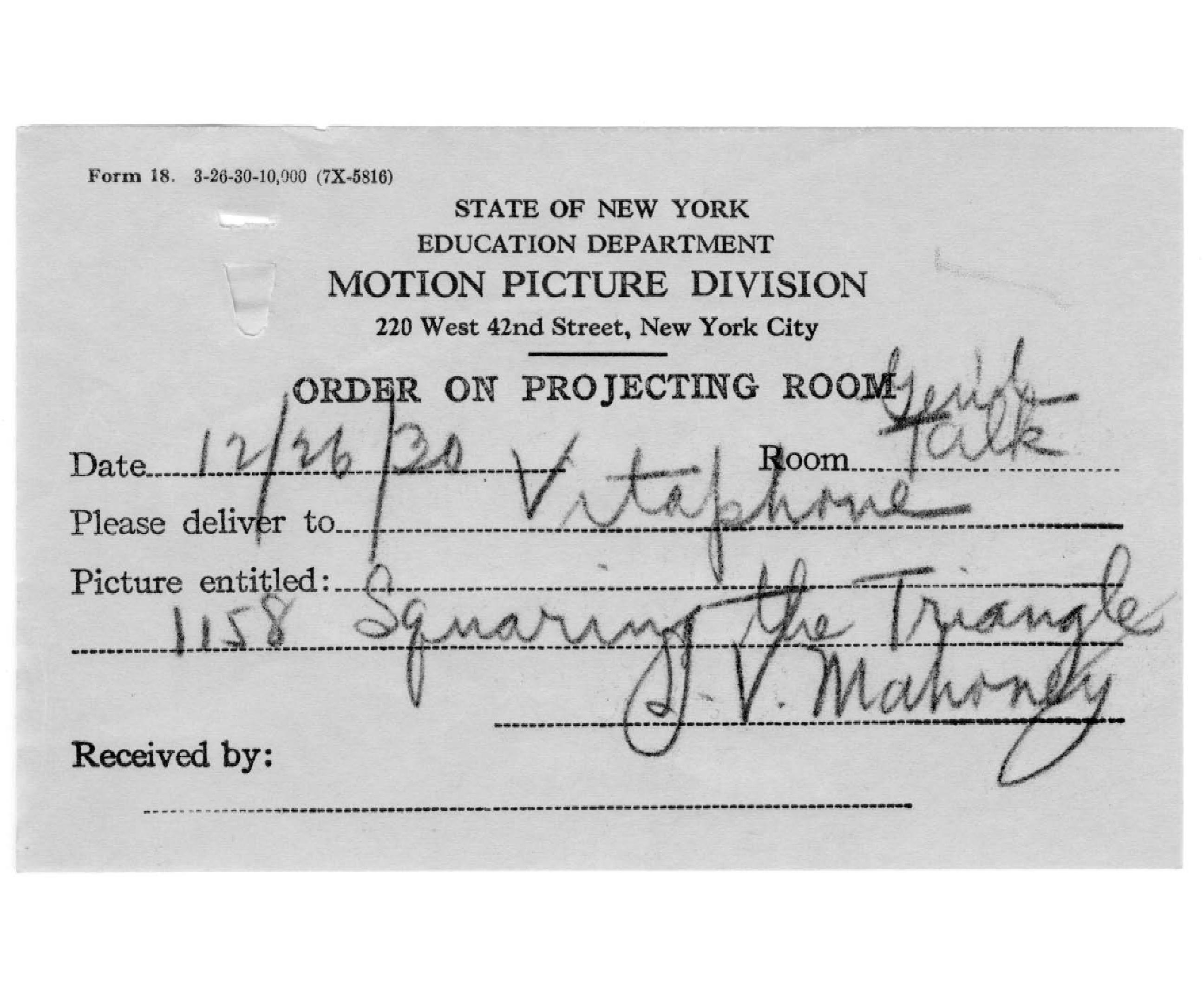
Dating to December 1930, they include a handwritten projection-room order and two pages of the original screenplay for Squaring the Triangle, a Vitaphone comedy in which Methot was identified as the female lead.
The surviving script offers an amusing glimpse into a domestic comedy of the era, complete with marital suspicions, a mysterious visitor, and a rather unexpected punchline.
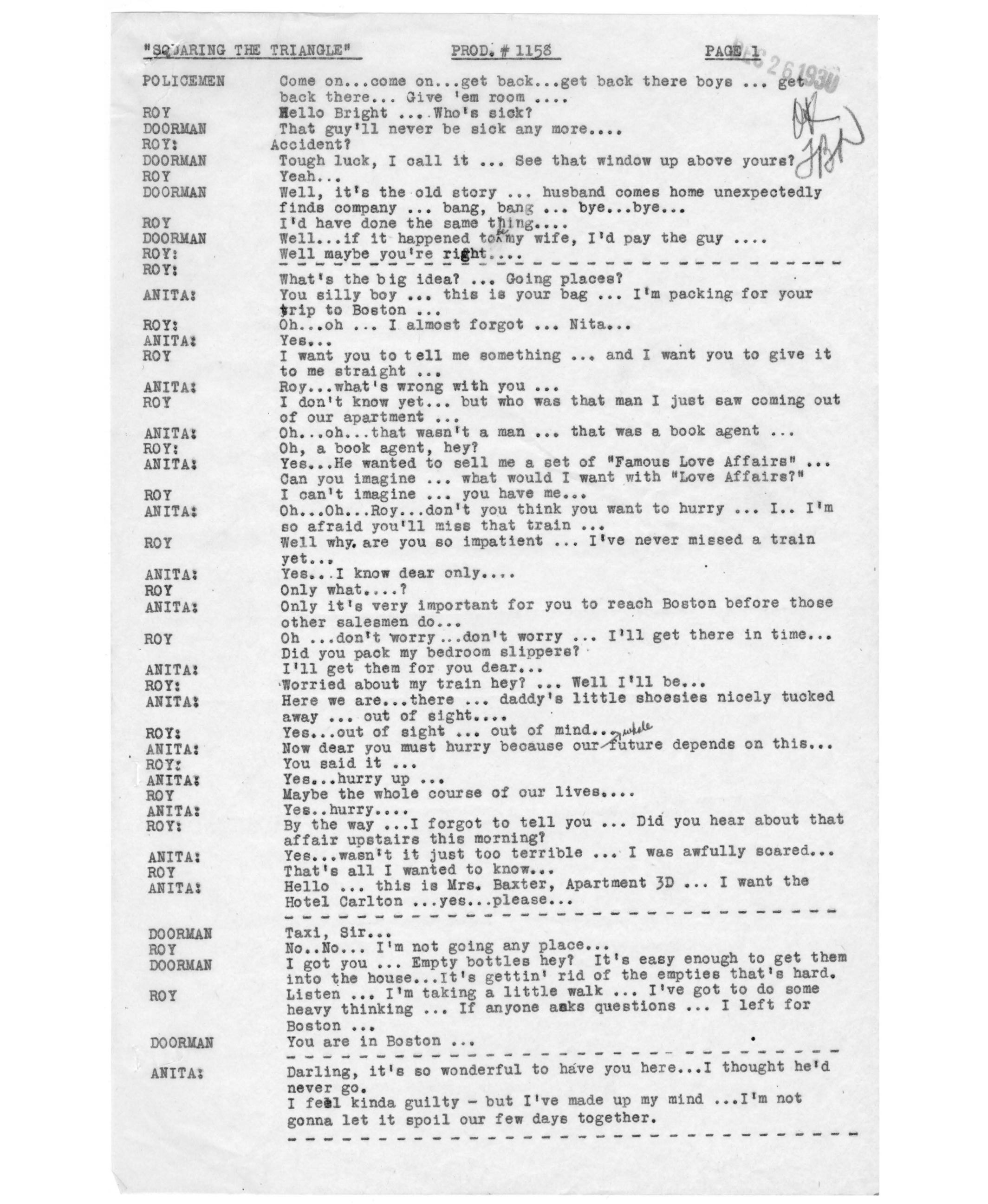
Nearly a century later, we’re able to look over the very dialogue that audiences would have heard in 1930.